Mandatory Insurance (Chapter 13)
TL;DR
Insurance proves financial responsibility; avoid lapses and keep proof handy—post-incident documentation helps claims.
Scope
Foundations of financial responsibility, insurance proof, lapses, and incident handling. Verify Missouri minimum coverage figures.
Learning Objectives
- Understand purpose of mandatory insurance.
- Recognize consequences of lapses.
- Know basic post-incident documentation needs.
- Implement strategies to maintain continuous coverage.
1. Financial Responsibility
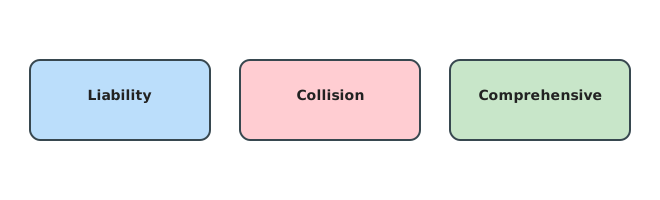
Insurance provides liability protection; required minimums ensure base compensation capability (confirm actual limits in official materials).
Visual: Basic coverage components
2. Proof of Insurance
Carry physical or digital card; must present during traffic stops, registration, certain crashes.
3. Lapses & Consequences
- Possible fines.
- Registration or license impacts.
- Increased future premiums.
4. Maintaining Coverage
- Automatic payment setup.
- Promptly update address or vehicle changes.
- Periodic policy review for adequate limits.
5. After an Incident
- Ensure safety, exchange information.
- Document: time, location, conditions.
- Contact insurer promptly.
Quick Self-Check
- Why is liability coverage mandated?
- What happens if coverage lapses?
- Why document incident details?
Proceed to quiz.
3 things to remember
- Minimums set a floor, not a ceiling—limits can be increased for protection.
- Address/payment updates prevent accidental lapses.
- After a crash: ensure safety, exchange info, document details, notify insurer.