Everyday Driving Tips (Chapter 8)
TL;DR
Scan widely, signal early, keep space cushions, and drive predictably to reduce surprises for everyone.
Scope
Routine safety habits: scanning, signaling, space cushions, courtesy interaction, hazard anticipation.
Learning Objectives
- Build consistent mirror & shoulder check habits.
- Maintain space cushions around vehicle.
- Apply proactive hazard anticipation.
- Practice courtesy to reduce unpredictable maneuvers.
1. Scanning & Observation
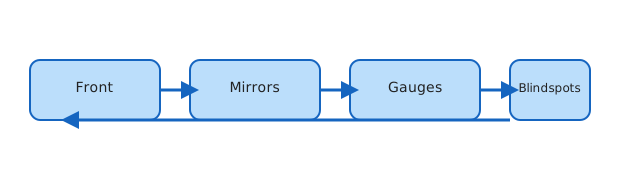
Systematic glance pattern: front, mirrors, instrument cluster, blind spots when needed. Look several seconds ahead; identify potential conflicts early.
Scan cycle visual
2. Signaling Discipline
Signal before braking or lateral movement; maintain signal through maneuver; cancel promptly.
3. Space Cushions
Keep time-based following gap; adjust lateral position to avoid clustering. Maintain escape route to one side.
4. Courtesy & Predictability
Yield voluntarily to defuse aggressive merges; avoid abrupt lane changes; use calm, consistent pacing.
5. Hazard Anticipation
Watch for door openings, sudden stops, pedestrians stepping between parked cars, turning vehicles without signals.
Quick Self-Check
- What comprises a robust scan cycle?
- Why maintain an escape route?
- When to activate turn signal?
Proceed to quiz.
3 things to remember
- Use a repeatable scan cycle (front → mirrors → gauges → sides/blind spots when needed).
- Keep an escape route; don’t get boxed in.
- Signal before braking or moving laterally; cancel promptly after.