Highway Driving (Chapter 6)
TL;DR
Match traffic speed on entry, pass decisively, and expand time gaps—higher speeds magnify stopping distance and hazard exposure.
Scope
Higher-speed driving strategies: merging, lane discipline, passing, speed & space management, hazard anticipation. Verify numeric speed advisories and any state-specific lane usage rules.
Learning Objectives
- Execute safe merges and exits with proper speed matching.
- Maintain lane discipline and appropriate passing etiquette.
- Adjust following distance for higher speeds.
- Anticipate hazards earlier via extended scanning.
1. Merging & Entry
- Accelerate in ramp lane to match main traffic speed (when safe).
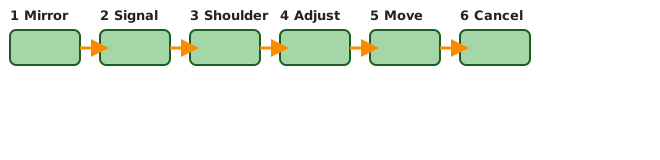
- Signal early; check mirrors & shoulder.
- Select an appropriate gap—avoid forcing merges or stopping at ramp end unless necessary.
2. Lane Discipline
- Keep right except when passing (verify local rule enforcement).
- Avoid frequent lane changes; they increase conflict points.
- Use center and right lanes for steady travel; left lane primarily for passing.
3. Passing Strategy
- Signal, check blind spots, pass promptly without exceeding safe speed.
- Re-enter lane only when you see the vehicle's front in your mirror.
- Avoid passing in limited visibility or near ramps/exits.
4. Speed & Space Management
- Increase time gap as speed rises; higher speed = longer stopping distance.
- Maintain a cushion ahead and to sides for escape routes.
- Adjust speed smoothly; avoid abrupt braking in dense traffic.
5. Extended Scanning
- Look farther ahead than city driving (multiple seconds of travel distance).
- Identify slowdowns early (brake lights, congestion patterns).
- Monitor entry ramps for merging conflicts.
Quick Self-Check
- Why match speed when merging?
- When is a pass complete safely?
- Why expand following gap at highway speeds?
Proceed to quiz.
3 things to remember
- Merge by matching speed and selecting a clear gap; avoid stopping at ramp ends.
- Finish a pass when you see the passed vehicle’s front in your mirror before returning.
- Increase following distance as speed rises; smooth inputs prevent chain reactions.