Parking (Chapter 5)
TL;DR
Know prohibited zones and how to set wheels on hills; practice a clear parallel parking sequence.
Scope
Safe parking practices, prohibited locations, hill parking procedures, and visibility considerations. Verify distances (e.g., from fire hydrants, crosswalks) in official guide.
Learning Objectives
- Identify common prohibited parking zones.
- Apply uphill/downhill parking wheel positioning.
- Execute parallel parking steps.
- Enhance vehicle visibility & safety when parked.
1. Prohibited Locations (Examples)
Do not park:
- In front of driveways.
- Within specified feet of fire hydrants, crosswalks, stop signs (verify numbers).
- On sidewalks or blocking pedestrian access.
- In travel lanes or double-parked.
- In designated accessible spaces without permit.
2. Hill Parking
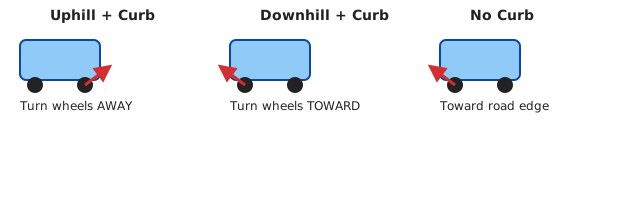
- Uphill with curb: Turn wheels away from curb; vehicle rolls slightly back into curb.
- Downhill with curb: Turn wheels toward curb; prevents forward roll.
- No curb: Turn wheels toward road edge to avoid rolling into traffic.
Set parking brake; do not rely solely on transmission.
3. Parallel Parking Sequence
- Signal + position beside forward vehicle (~parallel, short gap).
- Reverse turning toward curb, clearing rear bumper.
- Straighten wheels, continue backing.
- Turn opposite direction to center in space.
- Final adjustments leaving safe distance from vehicles ahead/behind.
4. Visibility & Security
- Use lights in poor visibility conditions when legally required (e.g., hazard lights if disabled).
- Remove valuables from view; lock doors.
- Avoid parking in blind curves or low-visibility crests.
Quick Self-Check
- Why turn wheels differently uphill vs downhill?
- Key parallel parking steps?
- Examples of prohibited zones?
Proceed to quiz.
3 things to remember
- Uphill with curb: wheels away; downhill: wheels toward curb; no curb: toward road edge.
- Common no-parking areas: hydrants, crosswalks, driveways (verify distances).
- Parallel parking: signal → reverse with angle → straighten → center → adjust.