Rules of the Road (Chapter 4)
TL;DR
Right-of-way is given, not taken; keep time-based following gaps and adapt speed to conditions (basic speed law) even if below the posted limit.
Scope
Right-of-way, lane discipline, following distance, speed law application, and courtesy yielding. Verify any numeric thresholds in official guide.
Learning Objectives
- Apply right-of-way at intersections and merges.
- Maintain adequate time-based following distance.
- Differentiate posted, advisory, and basic speed law responsibilities.
- Execute safe lane changes and merges.
1. Right-of-Way Principles
Given—not taken. Priority examples:
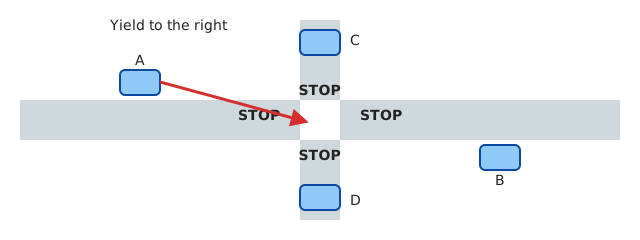
- First arrival at all-way stop proceeds first; simultaneous arrival: yield to right.
- Left turns yield to oncoming straight/right-turning traffic.
- Entering roadway (driveway/alley) yields to existing traffic.
- Pedestrians in crosswalk (marked/unmarked) typically have priority.
4-way stop visual
2. Lane Discipline
- Center your vehicle; avoid weaving.
- Pass only where permitted & safe; allow clear sight distance.
- Signal early; check mirrors then shoulder before lateral movement.
- Avoid lingering in blind spots of larger vehicles.
3. Following Distance
Use second-count method; expand gap for:
- Bad weather / low visibility.
- Higher speeds (highway).
- Following large obstructive vehicles.
4. Speed Management
- Posted limit: Maximum under ideal conditions.
- Basic law: Adjust speed to conditions (may be well below posted).
- Advisory signs: Suggest safe speed for specific hazard (curve, ramp) not enforceable as absolute limit.
5. Lane Change & Merge Sequence
Mirror → signal → shoulder check → adjust speed/gap → move smoothly → cancel signal.
6. Courtesy & Defensive Yielding
- Allow merging vehicles space rather than forcing late braking.
- Communicate intent clearly with consistent positioning & signaling.
- Yield if another driver’s behavior suggests uncertainty.
Quick Self-Check
- Difference between posted and basic speed law?
- Steps in safe lane change sequence?
- When do you expand following distance?
Proceed to quiz when ready.
3 things to remember
- Lane change sequence: mirror → signal → shoulder check → adjust → move → cancel.
- Expand following distance with speed and lower traction.
- Basic speed law: slow to what’s safe for conditions, not just the posted limit.