Signs, Signals & Markings (Chapter 3)
TL;DR
Read shape + color first to infer intent, then confirm with text/symbol. Pavement lines govern where you may travel or pass—solid means hold, broken allows change when safe.
Scope
Shapes, colors, and pavement markings that communicate regulatory, warning, and guidance information. Verify color or marking specifics (e.g., lane line meanings) in official guide.
Learning Objectives
- Interpret sign shape & color at a glance.
- Distinguish regulatory vs warning vs guide signage.
- Apply pavement marking meanings to lane positioning & passing.
- Recognize signal indications & lane control arrows.
1. Sign Shape
Shape signals intent before text. Catalog:
| Shape | Icon | Meaning |
|---|---|---|
| Octagon |  |
Stop |
| Triangle (down) |  |
Yield |
| Diamond |  |
Warning / hazard ahead |
| Rectangle (vertical) |  |
Regulatory |
| Rectangle (horizontal) |  |
Guide / info |
| Pentagon |  |
School zone / crossing |
| Circle |  |
Railroad advance |
| Crossbuck |  |
Railroad crossing |
| Pennant |  |
No passing zone |
2. Sign Colors
Color sets tone (prohibit vs warn vs guide). Catalog:
| Color | Swatch | General Meaning | Typical Examples |
|---|---|---|---|
| Red |  |
Stop / Yield / Prohibited | STOP, DO NOT ENTER, WRONG WAY |
| Yellow |  |
General Warning | Curve ahead, Merge area |
| Orange |  |
Temporary Work Zone | Road work ahead, Detour |
| Black |  |
Regulatory (text/symbol) | Speed numerals, lane control text |
| White |  |
Regulatory background | Speed limit, One Way |
| Fluorescent Yellow-Green |  |
School / Ped / Bike emphasis | School crossing, Pedestrian ahead |
| Green |  |
Direction / Guidance | Exit signs, mileage/distance |
| Brown |  |
Recreation / Cultural | Park entrance, Historic site |
| Blue |  |
Motorist Services | Gas, Food, Hospital |
3. Pavement Markings
| Marking | Icon | Meaning | Driver Action |
|---|---|---|---|
| Solid Center Line | 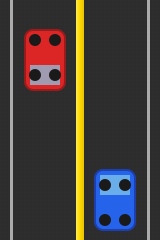 |
Separates opposing traffic; no passing where solid on your side | Stay in lane; do not initiate pass |
| Broken Center Line | 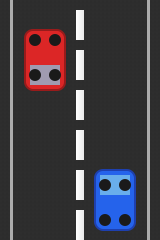 |
Passing permitted when clear | Signal, check gap, pass safely |
| Double Solid Yellow | 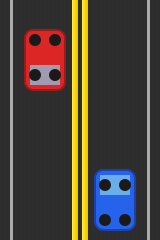 |
No passing either direction | Do not cross except turning left into/ out of driveway |
| White Lane Line (Same Direction) | 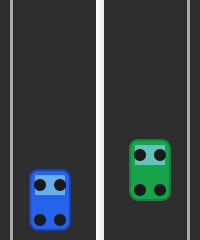 |
Separates lanes moving same direction | Solid = hold lane; broken = may change when safe |
| Lane Arrow | 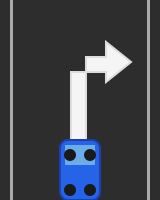 |
Permitted turn / movement from lane | Commit to shown movement; position early |
| Crosswalk |  |
Pedestrian crossing zone | Yield to pedestrians; stop before markings |
| Stop Line |  |
Legal stopping point at sign/signal | Stop before line; then proceed when allowed |
| Center Left-Turn Lane (3-lane) | 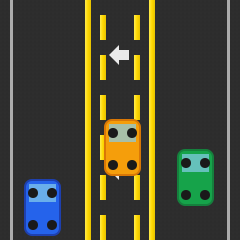 |
Shared lane for left turns from either direction; marked with double broken yellow and arrows | May use to turn left; yield to oncoming traffic; don't use for through travel |
| Divided Highway (4-lane) | 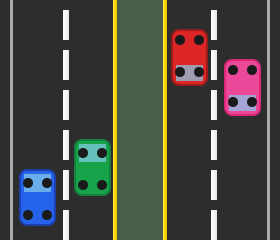 |
Physical median separates opposing directions; typically higher speed limit | Stay in proper direction lanes; no crossing median; obey posted speed |
4. Signals & Lane Control
| Indication | Icon | Meaning | Driver Action |
|---|---|---|---|
| Steady Red |  |
Stop | Full stop; turn right on red only if permitted |
| Steady Yellow |  |
Transition (about to change to red) | Prepare to stop if safe; clear intersection if already in |
| Steady Green |  |
Proceed | Go if intersection clear; yield to pedestrians/turning conflicts |
| Flashing Red |  |
All-way stop | Treat as stop sign; yield to traffic that arrived first |
| Flashing Yellow |  |
Caution; slower speed | Cover brake; proceed carefully |
| Lane Control | Icon | Meaning | Action |
|---|---|---|---|
| Green Arrow | → | Lane open for movement shown | Use lane for indicated movement |
| Red X | ✕ | Lane closed | Do not use lane; merge away |
| Yellow Arrow / X | ! | Transition (soon to change) | Prepare to vacate lane safely |
Left-Turn Signal Types Evolution
Modern flashing yellow arrow (FYA) heads replace traditional "doghouse" clusters. They give a clearer distinction between protected (green arrow) and permissive (flashing yellow arrow) phases and reduce driver confusion with circular greens.
| Type | Icon | Phases Provided | Notes |
|---|---|---|---|
| Traditional Doghouse 5-Section | 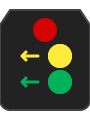 |
• Red (stop) • Green circle + Green arrow (protected left) • Yellow circle + Yellow arrow (clearance) • Green circle (permissive left, yield to oncoming) • Yellow circle (clearance) |
Left turn only; typically has sign "Green Ball Yield to Oncoming Traffic" |
| Vertical 5-Head Protected/Permissive |  |
• Red (stop) • Red + Green arrow (protected left) • Red + Yellow arrow (clearance) • Green circle (permissive left + through) • Yellow circle (clearance) |
Saves lateral space; still uses circular permissive green |
| 4-Section FYA Arrow Head |  |
• Red arrow (stop) • Green arrow (protected left) • Steady yellow arrow (clearance) • Flashing yellow arrow (permissive left) |
Distinct flashing arrow conveys yield to opposing traffic |
| 3-Section FYA Arrow Head |  |
• Red arrow (stop) • Green arrow (protected left) • Flashing yellow arrow (permissive left) |
Combines clearance into transition flash timing; used where simpler sequencing sufficient |
| Protected-Only 3-Head |  |
• Red arrow (stop) • Green arrow (protected left) • Yellow arrow (clearance) |
All arrows; never yield on flashing yellow because none provided |
Phase logic summary:
- Green Arrow: Protected turn; opposing and pedestrian conflicts held.
- Flashing Yellow Arrow: Permissive turn; yield to opposing traffic & pedestrians, then complete turn when gap exists.
- Steady Yellow Arrow: Prepare to stop; protected phase ending.
- Red Arrow: Stop—no turn allowed.
5. Work Zones & Temporary Control
| Element | Icon | Purpose | Driver Action |
|---|---|---|---|
| Cone |  |
Channelizes traffic; indicates taper | Reduce speed; stay within designated path |
| Orange Diamond Sign |  |
Warns of work zone condition | Read message early; adjust speed/position |
| Arrow Board |  |
Directs merge or lane shift | Merge promptly and smoothly |
| Flagger / Paddle |  |
Provides hand/paddle control | Obey flagger instructions immediately |
| Barrier |  |
Separates workers and traffic | Do not drive behind barriers; maintain buffer |
Slow early, increase following distance, and expect sudden stops or workers close to the lane edge.
Quick Self-Check
- What does a pentagon shape suggest?
- Difference between solid and broken white lane lines?
- Meaning of a flashing yellow signal?
Proceed to quiz when confident.
3 things to remember
- Shape + color are fast clues (e.g., octagon = stop; yellow = warning).
- Lane lines: solid = maintain lane; broken = lane change or passing when safe.
- Flashing red = stop; flashing yellow = caution.